Category: Systems and Models
Reusable thinking systems and mental models that apply across multiple decisions. General-purpose frameworks you internalize once and use repeatedly (e.g., “Reversibility Principle”, “Maintenance Floor Method”, “Tutorial-to-Task Ratio”). No specific recommendations—focuses on the decision-making process itself. Format: Explainers with examples, step-by-step applications, diagnostic tools Reader gets: A reusable lens to evaluate future decisions independently
-

Invisible Geniuses: Dismantling the Architecture of Forgetting
History isn’t written by accident—it’s constructed through deliberate choices about whose contributions matter and whose can be safely erased. The Pattern of Erasure Across centuries and continents, a consistent pattern emerges: brilliant minds make groundbreaking contributions, only to be systematically removed from the historical record. This isn’t mere oversight—it’s what scholars call the “architecture of…
-
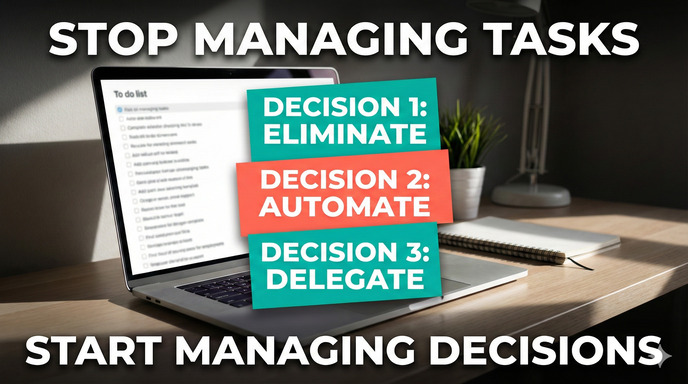
Why Your To-Do List Fails (And What Actually Works in 2026)
Your to-do list isn’t broken, but it wasn’t designed for the type of work you do in 2026. The result: you organize more, accomplish less, and end up blaming yourself instead of questioning the system. The Eternal Wednesday at 4 PM It’s 4 PM on a random Wednesday.Your list has 23 tasks.You wrote 19 of…
-

AI and The Great Reshuffling: Guide to Leading the Cognitive Revolution
We are experiencing one of the most profound transformations in the history of work. Artificial Intelligence has evolved from a distant concept into an active force reshaping every industry and our very definition of productivity. At Scalar Pivot, we analyze what this “Great Reshuffling” means and how you can position yourself at the forefront. The…
-

The “Airbnb Photo” Trap: Identifying Workflow-Killing Workspaces Before You Book
That sun-drenched loft in Medellin looks like a productivity oasis, but if the workspace is optimized for Instagram rather than focus, your deep work sessions will collapse by day three. Learning to audit listing photos for “attention friction” is the only way to avoid losing half your workday to constant physical readjustments. The 4-Hour Focus…
-
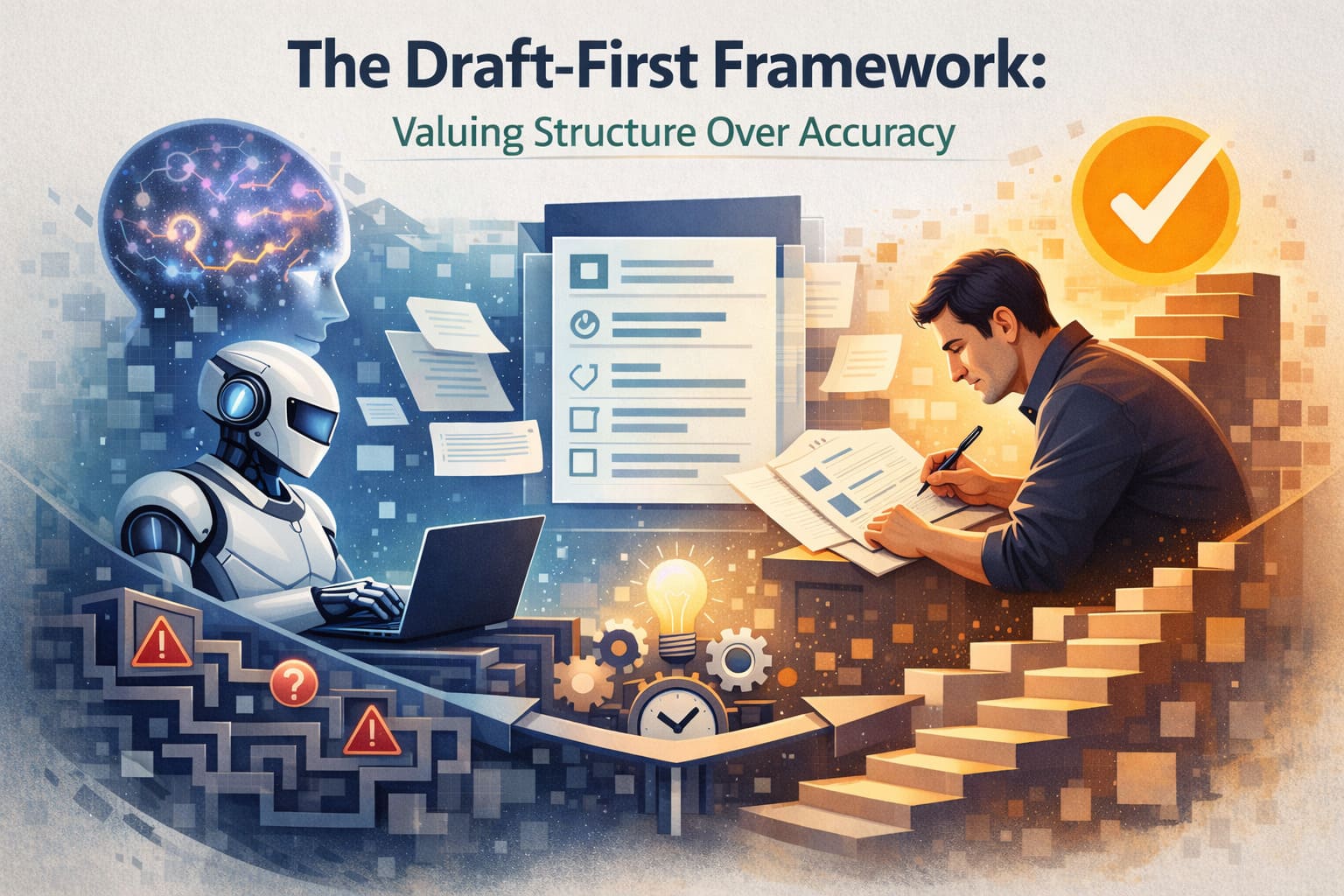
The Draft-First Framework: Valuing Structure Over Accuracy
The primary friction in adopting generative AI for professional workflows often stems from a fundamental misunderstanding of the tool’s nature. Users expecting a probabilistic token generator to function as a deterministic knowledge base inevitably encounter “hallucinations”—plausible-sounding but factually incorrect fabrications. This discrepancy leads to a cycle of anxiety, excessive verification, and eventual abandonment of the…
-

How to Choose Your Second Brain Without Destroying Your Productivity
Choosing a second brain system might seem like the ultimate solution to information overload, but most professionals end up trapped in complex tools, endless migrations, and systems that create more friction than results. This article helps you evaluate, with analytical rigor, whether you actually need to switch your note-taking system or if you’re simply using…
-

High-Learning-Curve vs. Low-Learning-Curve Tools: A Practical Evaluation Model
The Asymmetric Learner Technical Economics Temporal Discounting in Technical Tool Selection An analysis of cognitive friction, loss aversion, and the long-term economic impact of skill acquisition latency. Theoretical Framework The reluctance to adopt high-efficiency tools is not merely a preference for simplicity but a manifestation of hyperbolic discounting. According to Laibson (1997), individuals consistently undervalue…
-

How to Make Better Tool and Workflow Decisions Under Incomplete Information
Most productivity decisions happen with incomplete information. You can’t know if a new tool will work for you until you’ve used it for weeks. You can’t predict if a workflow change will stick until you’ve tested it under real conditions. Better decisions aren’t about predicting the future—they’re about building systems that work across multiple possible…
-

Opportunity Cost for Productivity Decisions: Beyond Textbook Economics
Opportunity cost in economics textbooks is about comparing monetary values. In real productivity decisions, it’s about comparing time, attention, and energy investments—resources that can’t be recovered once spent. Understanding what you give up by choosing one tool or workflow helps you make better trade-offs. What Is Opportunity Cost in Productivity Contexts? Textbook definition: Opportunity cost…
-
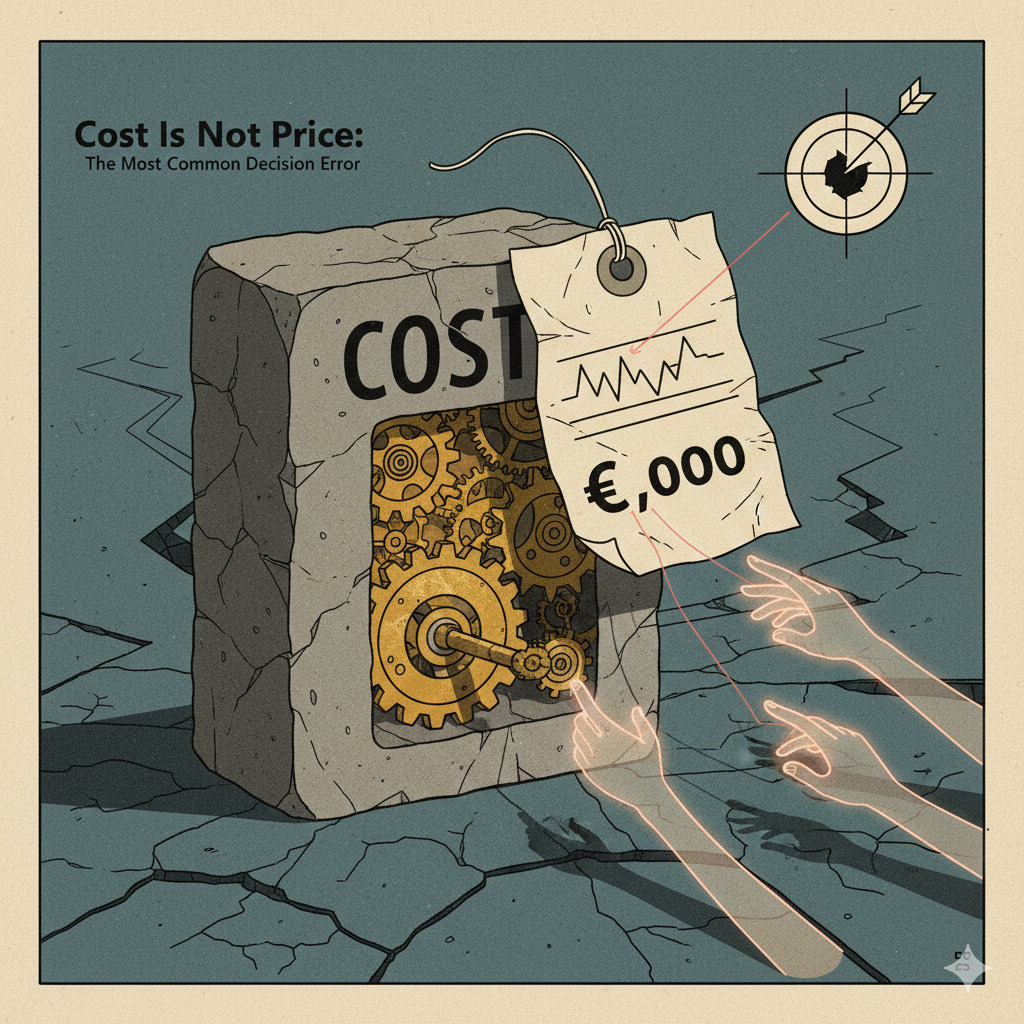
Cost Is Not Price: The Most Common Decision Error
Most people choose productivity tools based on their price tag. But the real cost isn’t the $0 or $10/month you pay—it’s the hours you’ll spend learning, configuring, and maintaining the system over months or years. What Is the Difference Between Purchase Price and Time Cost? Purchase price is the one-time or monthly fee you pay…