
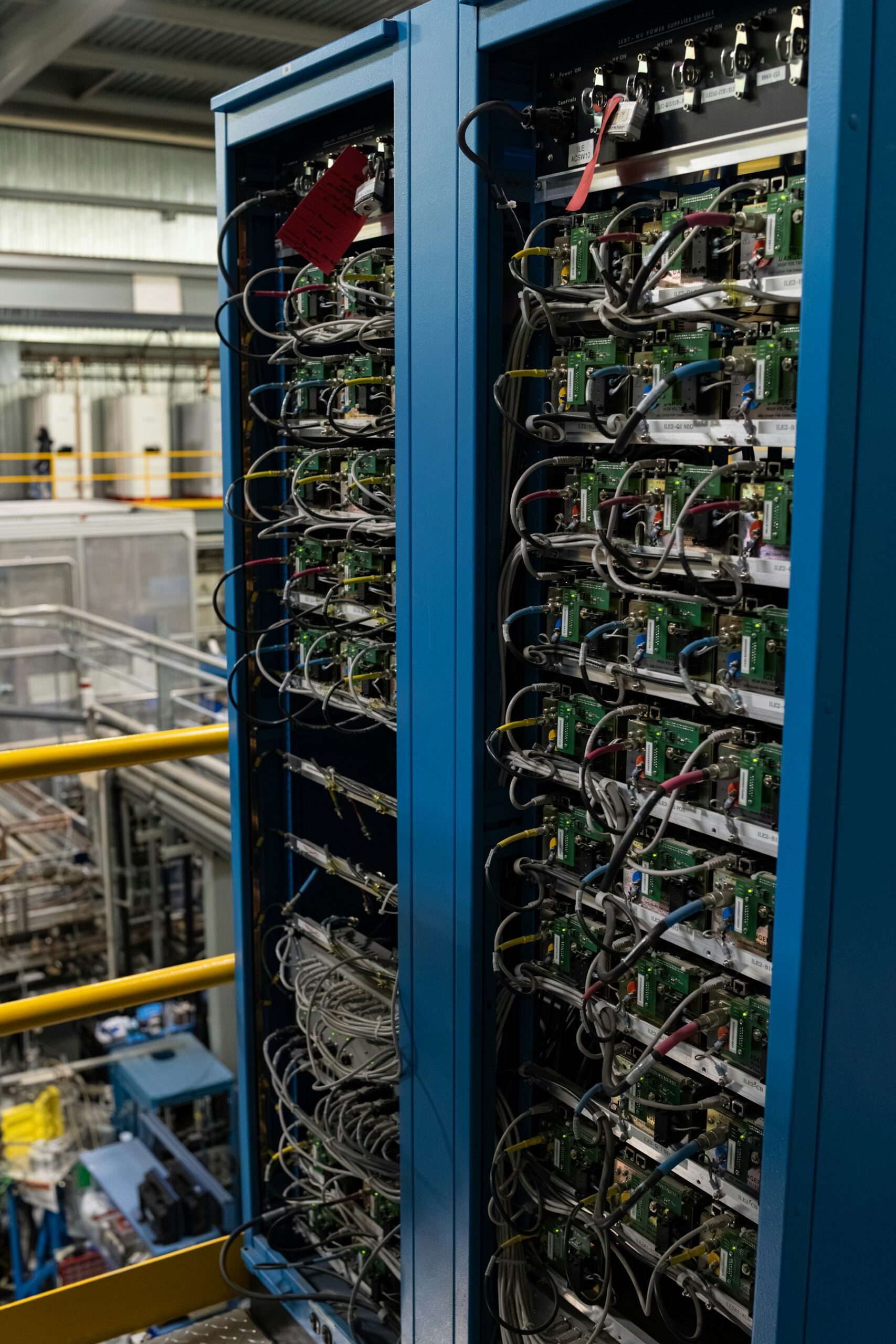
The least interesting fact about September 3, 2026 is that ChatGPT went down.
OpenAI reported elevated errors affecting ChatGPT and Codex and said it had applied mitigation while monitoring recovery. On the same day, xAI reported an outage affecting Grok. Anthropic, by contrast, showed its systems as operational at the time of writing, although its recent incident history also contains several disruptions.
There is no public evidence that these incidents shared a common cause. That matters, because turning a coincidence into “all AI went down” would be dramatic but wrong.
The more interesting question is different.
What would happen if artificial intelligence suddenly stopped advancing and was reduced to a handful of reasonably good assistants for writing, summarizing and coding?
No autonomous research agents. No systems operating entire workflows. No AI navigating software, analyzing thousands of documents or coordinating other agents. Something closer to the first generation of generative AI — except after companies had already reorganized themselves around far more capable systems.
That reversal could prove more disruptive than AI’s original arrival.
The risk may not be that AI replaces us
For years, the dominant question has been: which jobs will artificial intelligence replace?
There is another, less dramatic question: which jobs are we redesigning under the assumption that AI will always be available?
A bank can retain its employees while making AI models part of its operational infrastructure. A software company can keep its engineers while delegating much of the first-pass coding to agents. A research team can retain analysts while automating literature search, information extraction and first drafts.
The humans remain. Some of the operational knowledge may not.
The International Monetary Fund warned in July 2026 that many financial AI applications depend on a small number of cloud, data and model providers. A disruption at a critical provider could therefore affect many institutions at once. A technology dependency can become a systemic dependency.
The Bank for International Settlements describes an AI supply chain spanning hardware, cloud infrastructure, training data, foundation models and applications. High fixed costs, economies of scale and network effects encourage concentration. AI is beginning to look less like an app and more like infrastructure.
Infrastructure has one inconvenient property: we usually discover how dependent we are on it when it fails.
The first 24 hours would probably be almost funny
A prolonged AI blackout would not instantly stop the knowledge economy.
People would write complete emails again. Developers would spend more time in documentation. Analysts would rebuild formulas. Students would face blank pages. Sales teams would draft proposals from scratch.
Excel would still work. Compilers would still work. The internet would still work.
Civilization would survive.
That is exactly why the scenario is interesting. The first shock might be psychological before it became economic: we would discover how much of our recent sense of productivity comes from actually finishing faster, and how much comes from work simply feeling easier.
A preregistered 2026 study involving 1,237 participants found what its authors call a “speedup illusion”. On some simple cognitive tasks, people expected AI to make them significantly faster even when actual completion times did not differ. What did fall was subjective effort.
AI may be changing not only productivity, but our expectations about how hard thinking should feel.
The real problem appears six months later
Now imagine a company that spent three years hiring fewer junior workers because AI could perform many of the tasks that traditionally served as apprenticeship.
The senior staff are still there. But fewer people have gone through the stage where professional intuition is built.
A small 2026 experiment on AI-assisted programming used a useful term: epistemic debt. Participants could produce functional software with AI, but those who used unrestricted assistance performed much worse when they later had to maintain that code without it. In the follow-up task, the unrestricted-AI group had a 77% failure rate, compared with 39% for a group whose tool forced them to explain and understand generated code. It is a small study and should be treated as preliminary evidence, but the mechanism is worth considering. Visible output can rise while invisible understanding falls.
That trade works beautifully while the machine remains available.
The liability appears when it does not.
The expert-worker paradox
The productivity evidence does not simply say that “AI makes everyone more productive.” Effects vary by task and by worker.
Erik Brynjolfsson, Danielle Li and Lindsey Raymond studied 5,179 customer-support agents and found an average productivity increase of 14%. But the gains were highly uneven: novice and lower-skilled workers improved by roughly 34%, while the effect on experienced, high-skilled workers was small. The authors suggest that AI can distribute some of the tacit knowledge of stronger workers.
That is good news.
Until it creates a lateral question: what happens if organizations gradually stop producing enough experts whose knowledge can be distributed?
The first generations of models learned directly or indirectly from decades of human output. Future workers increasingly learn from the models. If deep human knowledge stops renewing itself at the same rate, an organization could become extraordinarily efficient while simultaneously becoming less capable of reconstructing the processes behind that efficiency.
It is the cognitive equivalent of a factory that works perfectly as long as nobody has to open the machine.
The dissenters have a point worth hearing
Much of the technology industry treats increasingly autonomous AI as an almost inevitable trajectory. Not everyone is convinced.
MIT economist Daron Acemoglu has challenged some of the most expansive macroeconomic forecasts. His task-based analysis estimates that total factor productivity gains attributable to AI could be below 0.53% over ten years. His argument is not that AI is useless. It is that good results on easy-to-learn tasks should not be automatically extrapolated to complex activities filled with context, judgment and hard-to-measure outcomes. The gains can be real while still being far less revolutionary than the dominant narrative suggests.
Cognitive scientist Gary Marcus has pursued a different criticism for years: scaling language models does not automatically solve hallucinations, brittleness or agent reliability. His 2026 outlook argues that LLMs remain useful but that a straight-line path from larger models to reliable general-purpose intelligence is still an unproven technical assumption. His position is deliberately outside Silicon Valley’s dominant narrative.
Then METR produced one of the most uncomfortable empirical results in the debate. In 2025, experienced open-source developers working in repositories they knew well took 19% longer when AI tools were available. Before the experiment they expected to be 24% faster; afterward they still believed they had gained time. Measured productivity and perceived productivity moved in opposite directions.
METR later reported that newer tools likely produced more acceleration, but acknowledged that selection effects made the size of that improvement difficult to estimate. The evidence is changing almost as fast as the tools.
That disagreement matters. It forces us to separate two concepts that are often treated as synonyms: using AI and being more productive.
Yet losing it would still hurt
Skepticism about some promises should not be confused with denying real gains.
Microsoft studied more than 6,000 workers across 56 firms over six months. Workers who used its AI tool spent less time in email and completed documents around 12% faster. There are real gains in specific tasks.
The problem changes when those gains become permanent organizational structure.
Suppose a company discovers that ten AI-assisted employees can do work that previously required fifteen. It restructures around ten. Two years later, advanced AI becomes unavailable and only modest writing and coding assistants remain.
The company does not magically return to its old productivity.
It now has ten humans trying to operate a process designed for fifteen humans plus machines.
That is the more interesting failure mode: not a world without ChatGPT, but a world designed around ChatGPT in which ChatGPT stops being what it was.
Human expertise would suddenly become more valuable
A prolonged contraction in AI capability would also create winners.
A programmer capable of reasoning through an entire architecture would become more valuable than someone primarily skilled at orchestrating agents. A researcher with deep domain knowledge would regain an advantage over an excellent prompt operator. A lawyer who understands procedure and precedent would be harder to replace. An analyst capable of reconstructing a methodology from raw data would outperform someone who mainly knows how to request a polished report.
We might eventually invent a new category: the AI-resilient professional.
Not someone who rejects artificial intelligence. Someone who can use it intensively without surrendering the underlying competence of the profession.
This connects to a broader point we have made before at ScalarPivot: the model is no longer the whole story. Once AI is embedded in a workflow, context, infrastructure, data, verification and the human capability surrounding the model matter just as much.
Companies need to learn a new word: reversibility
Enterprise technology has spent decades developing concepts such as redundancy, backups, disaster recovery and business continuity.
AI adoption needs an equivalent.
NIST recommends explicit management of third-party components and pretrained models inside generative-AI systems. The final system inherits dependencies that users may never see.
But resilience cannot simply mean buying subscriptions from OpenAI, Anthropic and Google at the same time. If apparently independent vendors depend on highly concentrated clouds, chip suppliers or infrastructure chains, vendor diversification may provide less redundancy than it appears.
The OECD has highlighted increasing concentration across critical layers of the AI stack, from compute and cloud infrastructure to foundation models. Competition at the visible layer can hide dependence below it.
Real resilience would require something less glamorous:
- processes that can still be executed manually;
- human-readable documentation;
- exportable data;
- local models for selected functions;
- workers who retain core skills;
- and systems that continue operating, although at reduced capability, when the most advanced AI layer disappears.
Engineers already have a useful phrase for this: graceful degradation.
When one part of a system fails, the entire system does not collapse. It becomes less capable.
That may become one of the most important design principles of the AI economy.
What if the great blackout never happens?
That is entirely possible.
Models may keep improving. Infrastructure may become more resilient. Compute may get cheaper. Agents may become even more deeply embedded in the economy.
In that world, preserving manual processes and redundant human capability could look inefficient.
Until the day it does not.
Airliners retain redundant systems pilots rarely need. Banks hold capital against crises they hope never happen. Cities fund fire departments even though most buildings will never burn.
Organizations may eventually need to preserve a certain amount of unautomated human cognitive capacity for the same reason.
Not because artificial intelligence is destined to disappear.
Because any technology powerful enough to become infrastructure turns its own availability into a dependency.
Today’s ChatGPT outage will probably end up as one more entry in an uptime history. But for a few hours it made something normally invisible easier to see: not how much artificial intelligence can do for us, but how quickly we have begun to assume it will always be there when we need it.
That question may matter more than predicting the exact date of AGI.
Sources
- OpenAI Status — Elevated errors across ChatGPT and Codex
- xAI Status — Grok models outage
- Claude Status
- IMF — How Central Banks Can Contain Financial Stability Risks as AI Accelerates Change
- BIS — The AI supply chain
- OECD — Is AI across the stack competitive or concentrated?
- NIST — Generative AI Profile
- NBER — Generative AI at Work
- NBER — The Simple Macroeconomics of AI
- METR — AI and experienced developer productivity
- METR — 2026 productivity update
- Microsoft Research — Early Impacts of M365 Copilot
- Yu et al. — Cognitive offloading and the speedup illusion
- Sankaranarayanan — Epistemic Debt in AI-assisted programming
- Gary Marcus — Predictions for AI in 2026
