
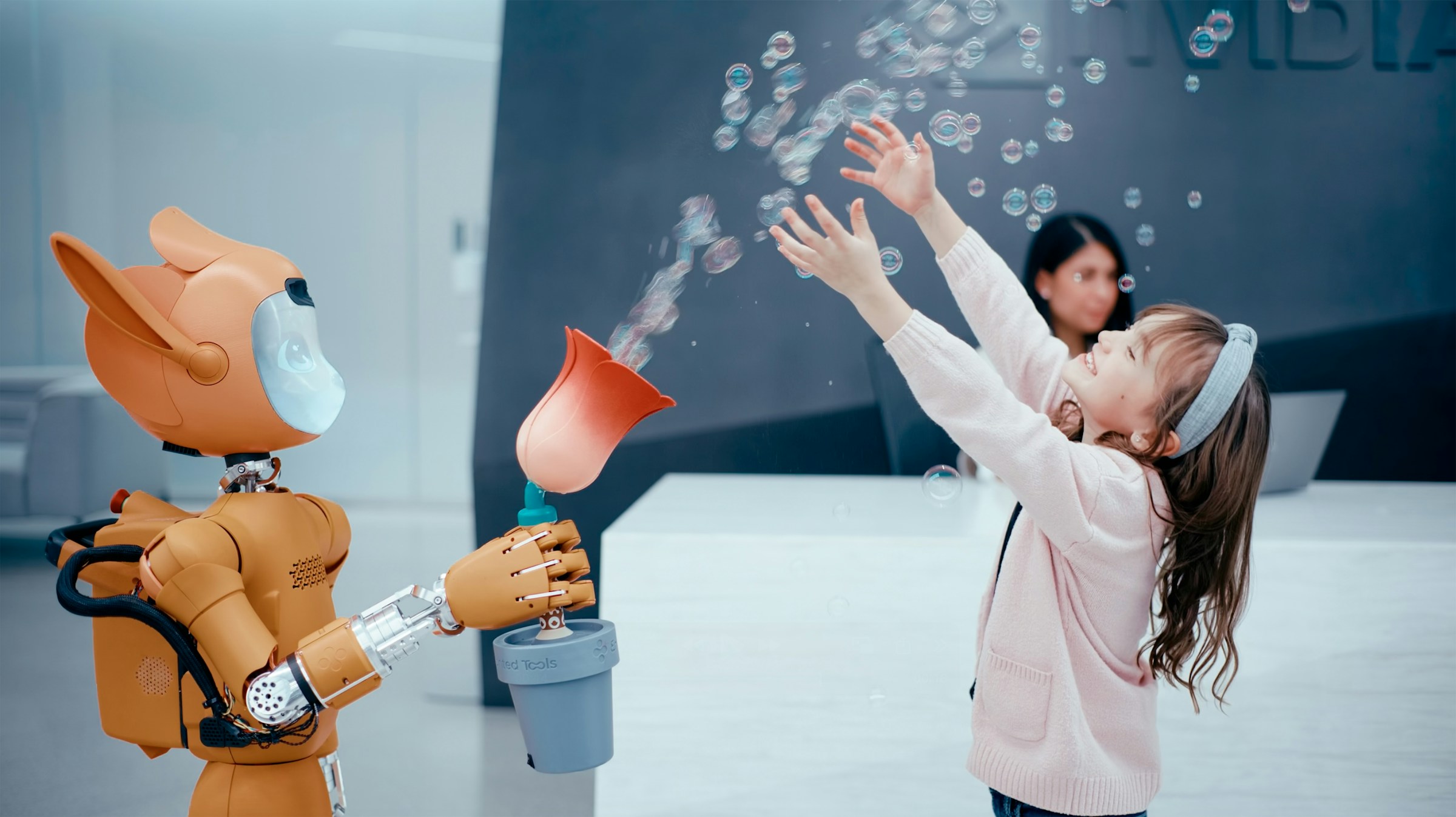
Have you seen the latest TikTok video of a robot dancing champeta? Or the one that seems to do every household chore? Or that other, slightly more unsettling one that looks as if someone tried to build the woman of your dreams?
Maybe it was not champeta. The algorithm changes the music depending on the country, the hour and whatever keeps your thumb from moving. But the trick is the same: a humanoid does something strikingly human for twenty or thirty seconds and, for a moment, it feels as if the future has already arrived.
The problem is that TikTok and a factory use different metrics.
On TikTok, not falling over before the video ends can be enough. In a factory, the machine has to repeat a task hundreds or thousands of times, recognize objects that are not exactly where they should be, react when the environment changes, avoid hitting the worker next to it, survive without an engineer intervening every twenty minutes and, after all that, cost less than the alternative.
China is now arriving at that question in a much less cinematic way. Regulators, investors and manufacturers are beginning to look more closely at how much of the humanoid boom is real business and how much is still demonstration, pilot project, research or public money trying to accelerate a strategic industry.
This does not mean Beijing has stopped believing in robots. If anything, the opposite is true. China’s Ministry of Industry and Information Technology wants humanoids to move from “demonstration mode” to “work mode,” with real-world trials in factories, logistics, maintenance, retail, healthcare, security and emergency response. Its 2026 action plan explicitly calls for routine deployment in practical scenarios and the capacity to land projects at scales measured in tens of thousands of units.
That is exactly why it matters that the market is starting to demand proof at the same time.
Clue one: the number that almost never appears in the videos
The International Federation of Robotics has started counting humanoids as a category of their own. Its estimate for 2025 is surprisingly small: roughly 7,000 humanoid robots sold worldwide for industrial and professional applications.
It is not a perfect comparison because the categories and years differ, but it helps recover a sense of scale. In 2024, around 542,000 conventional industrial robots were installed. These are the arms, cells and automated systems that almost never go viral but have spent decades welding, painting, palletizing and assembling.
There is another detail. A significant share of those 7,000 humanoids did not end up working full production shifts. Many were purchased by research centers or by companies using them to develop and train artificial intelligence. Automakers are testing them, yes, but mostly in small numbers and pilot programs.
That leaves an uncomfortable question: if mature commercial demand is still small, what exactly are we looking at when we see hundreds of models, new factories and multibillion-dollar valuations?
There is something curious about our relationship with domestic machines. We tend to imagine the future as a device that does the things we do not want to do ourselves.
The washing machine did not promise poetry. It promised not to make us scrub clothes. The vacuum cleaner never needed a face. The dishwasher never had to perform choreography to justify its existence.
Humanoids arrive with a different ambition. They are not supposed to replace one task. They are supposed to look capable of replacing many. That raises the bar enormously. A washing machine can be mediocre at everything except washing. A humanoid that costs thousands or tens of thousands of dollars does not have that luxury.
Clue two: China has more robots than the market yet knows what to do with
By July, official Chinese figures pointed to more than 400 complete humanoid robot products developed in the country, more than half the global total according to the Ministry of Industry. The number is impressive, but it also creates a familiar problem in hot technology markets: hundreds of teams are chasing use cases that are not fully settled.
Pricing shows how quickly the field is changing. Unitree sells the R1 from 29,900 yuan in China and from roughly US$4,900 internationally; the G1 sits much higher and the company’s upper-end models run into the tens of thousands of dollars. That is a dramatic fall from the old image of the humanoid as a six-figure laboratory machine.
But making the body cheaper does not solve the problem of the brain.
Gao Yang, co-founder of Spirit AI, put it plainly in an interview with Reuters only days ago: hardware can already run and dance convincingly, but the real bottleneck remains software — understanding general instructions, manipulating objects and responding to situations that were not carefully staged in advance.
His company reports success rates of about 90% on simple tasks in controlled settings. The most important word in that sentence is not 90%. It is controlled.
A demo asks: “Can it do it once?”
A pilot asks: “Can it do it repeatedly?”
An industry asks: “Can it do it thousands of times, with few failures, at a lower cost than the alternative?”
That is why the World Humanoid Robot Games in Beijing became more interesting when robots tried to connect a cable, manipulate objects or work through logistics scenarios than when they raced. One humanoid even beat the human 100-meter record, yet still had fairly ordinary trouble slowing down and avoiding obstacles.
The contrast is almost too perfect: we can build a machine that runs faster than Usain Bolt before we can build one that plugs in a cable with the reliability of a tired worker at 7 a.m. on a Monday.
The obsession with building something that “looks like us” did not begin with artificial intelligence. In the eighteenth century, automata that wrote, played instruments or imitated living creatures filled salons and royal courts.
They were not especially useful. They were extremely good at making people come closer and stare.
Sometimes a technology conquers the stage first and the factory later. Sometimes it never leaves the stage. The hard part is knowing which story you are watching before paying the valuation of the second one.
Clue three: the money is getting nervous
Unitree went public in Shanghai in August at a valuation close to US$9 billion. The initial response was spectacular. Then came the less entertaining part: from its highs, the stock fell by roughly 55%.
Now, according to Reuters, Chinese regulators are informally raising the bar for new listings by humanoid robotics companies. The concern is not that robots have stopped being a strategic priority. It is much more specific: the quality of the revenue.
Some of the money flowing through the sector comes from projects backed by local governments, data-collection centers, laboratories and industrial programs that may make perfect sense as policy, but do not necessarily prove that a private customer is willing to keep paying for the product.
That creates a distinction that can look minor on an investor slide and turn out to be enormous in an industry.
A government may buy robots because it wants to accelerate learning, create suppliers, train engineers and generate data. A factory buys a robot because it expects the machine to perform a task better, cheaper or more safely than another option.
Both purchases are real. They do not prove the same thing.
There is also something revealing in the kinds of fantasies we project onto these machines. A video titled “robot optimizes inventory for eight hours without a break” rarely goes viral.
Instead, we see robots cooking, caring, talking, dancing, serving drinks or deliberately approaching an attractive human appearance. Not because those tasks are simple. Quite the opposite. It is because they make it easy to blur utility, companionship, service and desire.
The humanoid market is not competing only for productivity. It is competing for our imagination. And imagination tends to pay before accounting does.
So is it all hype?
That would be too easy a conclusion.
There is hype. There are valuations that are difficult to justify with current sales. There are staged demonstrations that say less than they appear to about the ability to work in open environments. And there is public money that can be mistaken for commercial demand if you look only at revenue.
But none of that proves that China is making an irrational bet.
An industrial strategy can make sense even if many of today’s individual robots do not yet make sense as products. Every pilot produces data about motion, failure, grasping, perception and navigation. Every new factory pushes suppliers of motors, reducers, sensors, batteries and robotic hands to improve cost and quality. Every failed company leaves engineers, patents and suppliers that someone else can absorb.
The Chinese government’s own plan is revealing. It does not ask only for unit sales. It asks for real-world training scenarios, physical-world data, application verification and better components. In other words, China is using deployment as a form of research.
That resembles a logic the country has used before in electric vehicles, batteries and solar panels: manufacture, deploy, learn, cut costs and manufacture again. There is no guarantee the same story will repeat with humanoids — the technical problems are different — but it explains why immature demand does not necessarily stop investment.
The right question has already changed
Not long ago, the question was whether a humanoid could walk without falling over.
Then it was whether it could run.
Then whether it could dance, box, serve coffee or fold a T-shirt.
Now comes a much less glamorous stage: measuring operating hours, failure rates, human interventions, cost per task, maintenance, safety and return on investment.
That is bad news for viral videos and good news for the industry.
In fact, the decisive moment for humanoids will probably not arrive when we see one perform an impossible backflip. It will arrive when we stop looking at it.
When one is moving boxes in a warehouse and nobody reaches for a phone.
When another performs night inspections and the supervisor cares more about the inventory than the robot.
When a manager stops saying “we have a humanoid” and simply says “the machine does that task.”
That is when the shift China says it wants will have happened: from spectacle to work.
Until then, every new video deserves two questions.
How impressive is it?
And, more importantly:
Sources
- Reuters — China slows humanoid robot IPO rush as hype outruns reality, September 21, 2026.
- Reuters / International Federation of Robotics — global humanoid robot sales in 2025, September 21, 2026.
- China’s Ministry of Industry and Information Technology — 2026 action plan for training and deploying humanoids in real-world scenarios, June 8, 2026.
- Economic Daily / MIIT — from “demonstration mode” to “work mode,” June 24, 2026.
- State Council Information Office / Xinhua — more than 400 complete humanoid products developed in China, July 20, 2026.
- Reuters — real-world task tests at the World Humanoid Robot Games, August 23, 2026.
- Reuters — Spirit AI and the robot “brain” bottleneck, September 18, 2026.
- Unitree Robotics — Unitree R1 specifications and pricing.
- Reuters — Unitree’s Shanghai IPO valuation, August 6, 2026.
Featured photo: Enchanted Tools / Unsplash.
