-

Remote Work vs. Office Work: The Attention and Energy Cost Comparison
The choice between remote and office work in 2026 isn’t about salary or commute costs—it’s a fundamental trade-off between protected focus time and rapid skill acquisition through proximity. Each mode has a distinct cost structure measured in attention, energy, and learning velocity. What Is the True Cost Difference Between Remote and Office Work? When people…
-

Immediate Comfort vs. Long-Term Capability: How to Evaluate the Trade-Off
Every productivity decision involves trading short-term ease for long-term capability—or vice versa. Choosing the simpler tool feels better today but may limit you later. Investing time in complex systems hurts now but compounds over years. How do you know when the discomfort is worth it? Why Short-Term Friction Is Often Undervalued In 2026’s productivity landscape,…
-

High-Learning-Curve vs. Low-Learning-Curve Tools: A Practical Evaluation Model
The Asymmetric Learner Technical Economics Temporal Discounting in Technical Tool Selection An analysis of cognitive friction, loss aversion, and the long-term economic impact of skill acquisition latency. Theoretical Framework The reluctance to adopt high-efficiency tools is not merely a preference for simplicity but a manifestation of hyperbolic discounting. According to Laibson (1997), individuals consistently undervalue…
-

How to Make Better Tool and Workflow Decisions Under Incomplete Information
Most productivity decisions happen with incomplete information. You can’t know if a new tool will work for you until you’ve used it for weeks. You can’t predict if a workflow change will stick until you’ve tested it under real conditions. Better decisions aren’t about predicting the future—they’re about building systems that work across multiple possible…
-

Opportunity Cost: The Expense Nobody Tracks
Opportunity Cost: The Expense Nobody Tracks (2026) Strategic Analysis Opportunity Audit ⚡ 2026 OPPORTUNITY SNAPSHOT The Problem: The “Attention Leak” (Busywork vs. High-Leverage output). The Metric: ROA (Return on Attention) & Compounded Missed Gains. The Risk: Stagnation through optimization of the irrelevant. Solution: Shift toward “Aggressive Subtraction”. What is the “Expense Nobody Tracks” in 2026?…
-

Why Simple Tools Often Create More Long-Term Friction
The easiest tool to start with is often the hardest to maintain long-term. Simple tools promise zero setup and instant results, but frequently create cascading friction that accumulates over months. Understanding the difference between upfront ease and lifecycle overhead helps you choose tools that stay efficient as usage scales. The “Simple Tool” Trap When choosing…
-
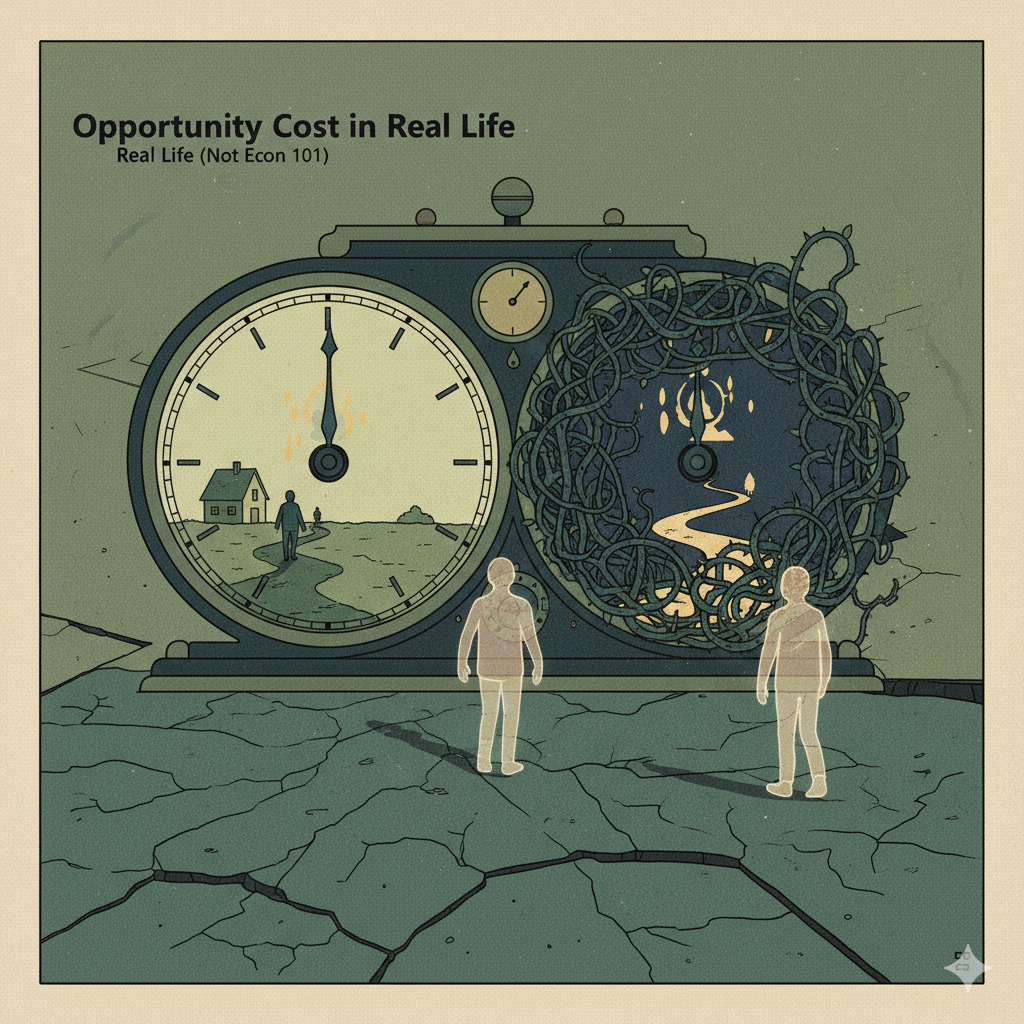
Opportunity Cost for Productivity Decisions: Beyond Textbook Economics
Opportunity cost in economics textbooks is about comparing monetary values. In real productivity decisions, it’s about comparing time, attention, and energy investments—resources that can’t be recovered once spent. Understanding what you give up by choosing one tool or workflow helps you make better trade-offs. What Is Opportunity Cost in Productivity Contexts? Textbook definition: Opportunity cost…
-
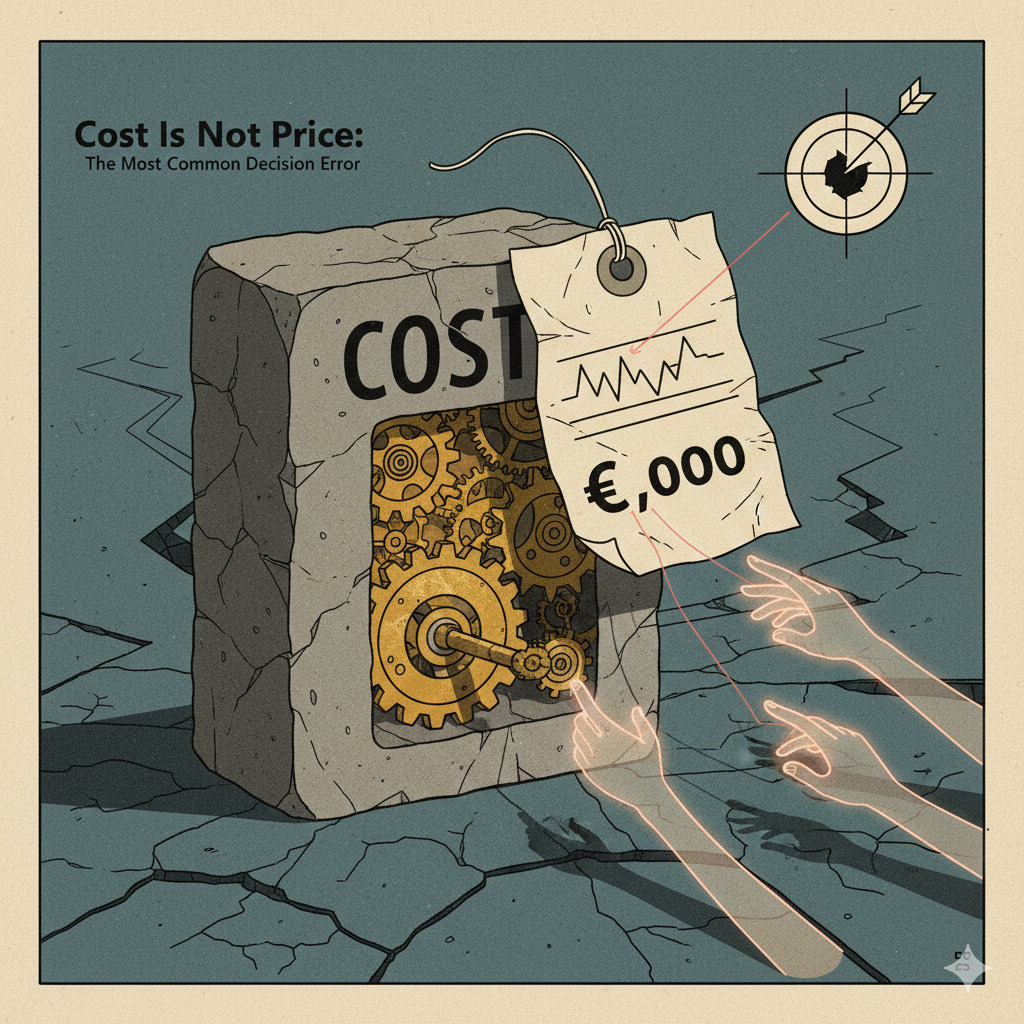
Cost Is Not Price: The Most Common Decision Error
Most people choose productivity tools based on their price tag. But the real cost isn’t the $0 or $10/month you pay—it’s the hours you’ll spend learning, configuring, and maintaining the system over months or years. What Is the Difference Between Purchase Price and Time Cost? Purchase price is the one-time or monthly fee you pay…
-

Decision Protocol for Complex Choices: A Structured Framework
When facing complex decisions about tools, workflows, or processes, relying on intuition alone often leads to suboptimal choices. A structured protocol helps you separate signal from noise and evaluate trade-offs systematically [web:40]. Why Intuition Alone Isn’t Enough Intuition reflects patterns from your past experience. This is valuable, but it has blind spots [web:42]: Recency bias:…
-

What Is a Decision Framework (and Why Intuition Alone Isn’t Enough)?
A decision framework is a repeatable, structured process for evaluating options and making choices that align with your long-term goals. Rather than relying on gut feeling alone, frameworks help you make decisions systematically—reducing bias, improving consistency, and making your reasoning transparent [web:40]. What Is a Decision Framework? Definition: A decision framework is a structured method…